
FIELD NOTES / VOLUME 01

We explore how humans grow, make, preserve, share, and understand food.
Follow the questionROOTS, CONTINUED
OBSERVATION IN PROGRESS
OBSERVATION 01
The kitchen has always been a laboratory.
Long before we understood fermentation, emulsification, caramelization, microbiology, preservation, nutrition, or plant science, we experimented anyway.
And gathered around the results.
A USEFUL INHERITANCE
THE OLD GARDEN / STILL ACTIVE
We inherited more than recipes.
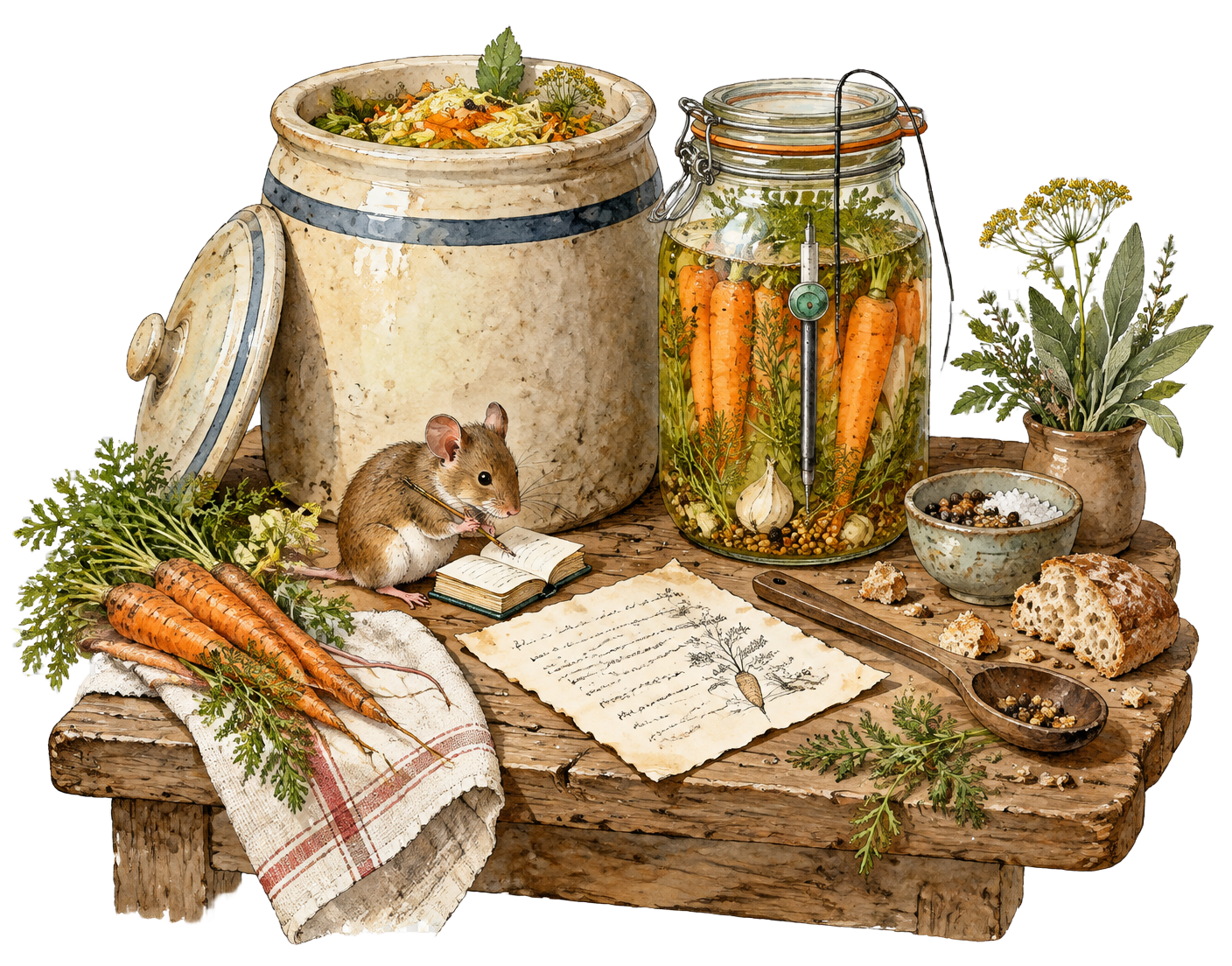
Every loaf, pickle, seed, feast, and preserved fruit carries accumulated observation. Necessity became technique. Technique became culture. Culture kept asking us to pass the bowl.
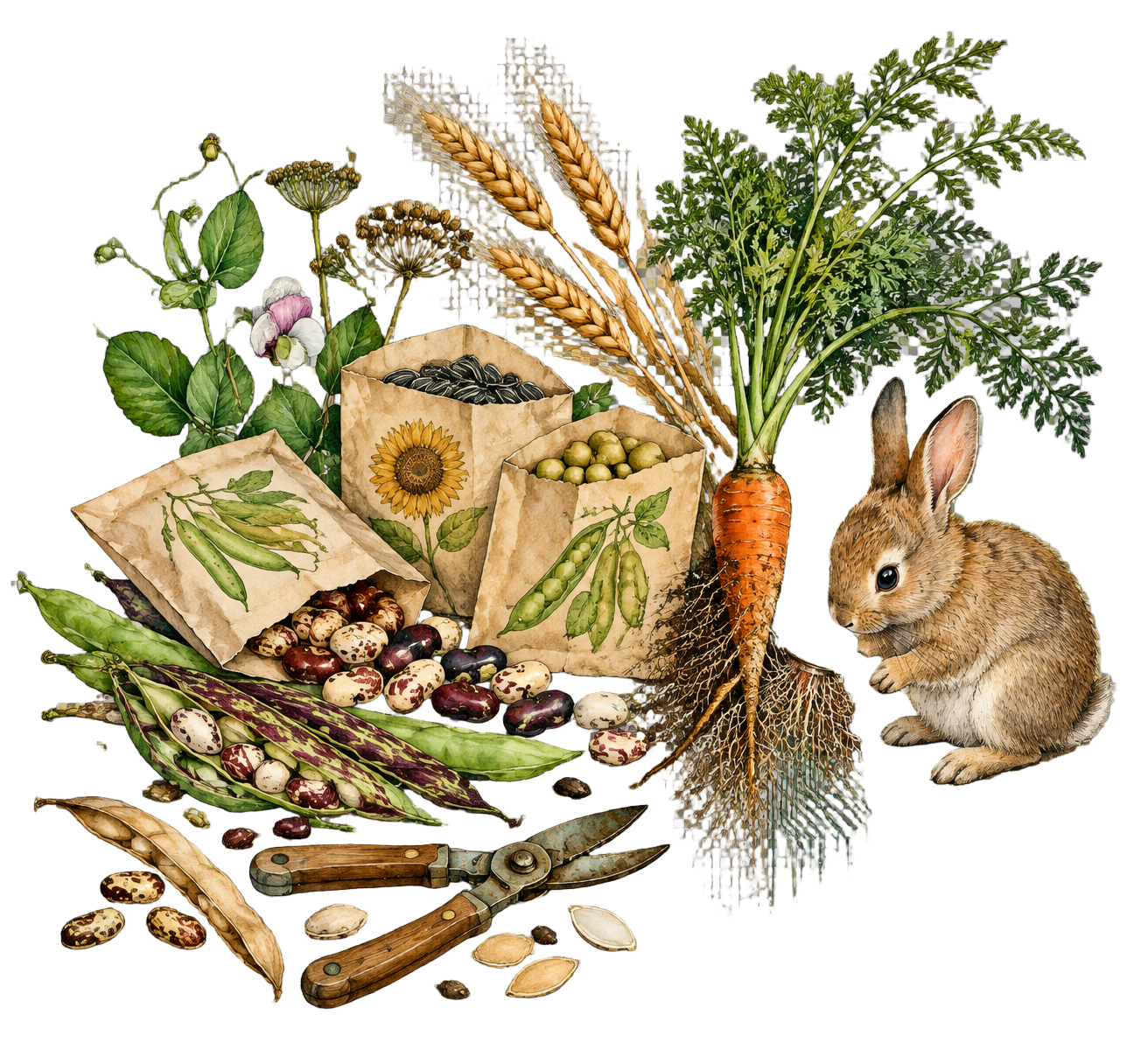
We respect that knowledge without treating tradition as unquestionable. The old garden is not obsolete. It is where the future starts.
WHAT WE DO / AN OPEN INDEX
Make, try, learn, question.
Four ways into one persistent curiosity.
Things we make
Edible experiments, current concepts, and seasonal ideas.
02Things we’re trying
Processes, prototypes, peculiar ingredients, and useful failures.
03Things we’re learning
Food history, agricultural practice, culture, and science.
04Things we’re questioning
Assumptions hiding in recipes, systems, shelves, and bins.
OBSERVATION 02 / SOCIAL SYSTEMS
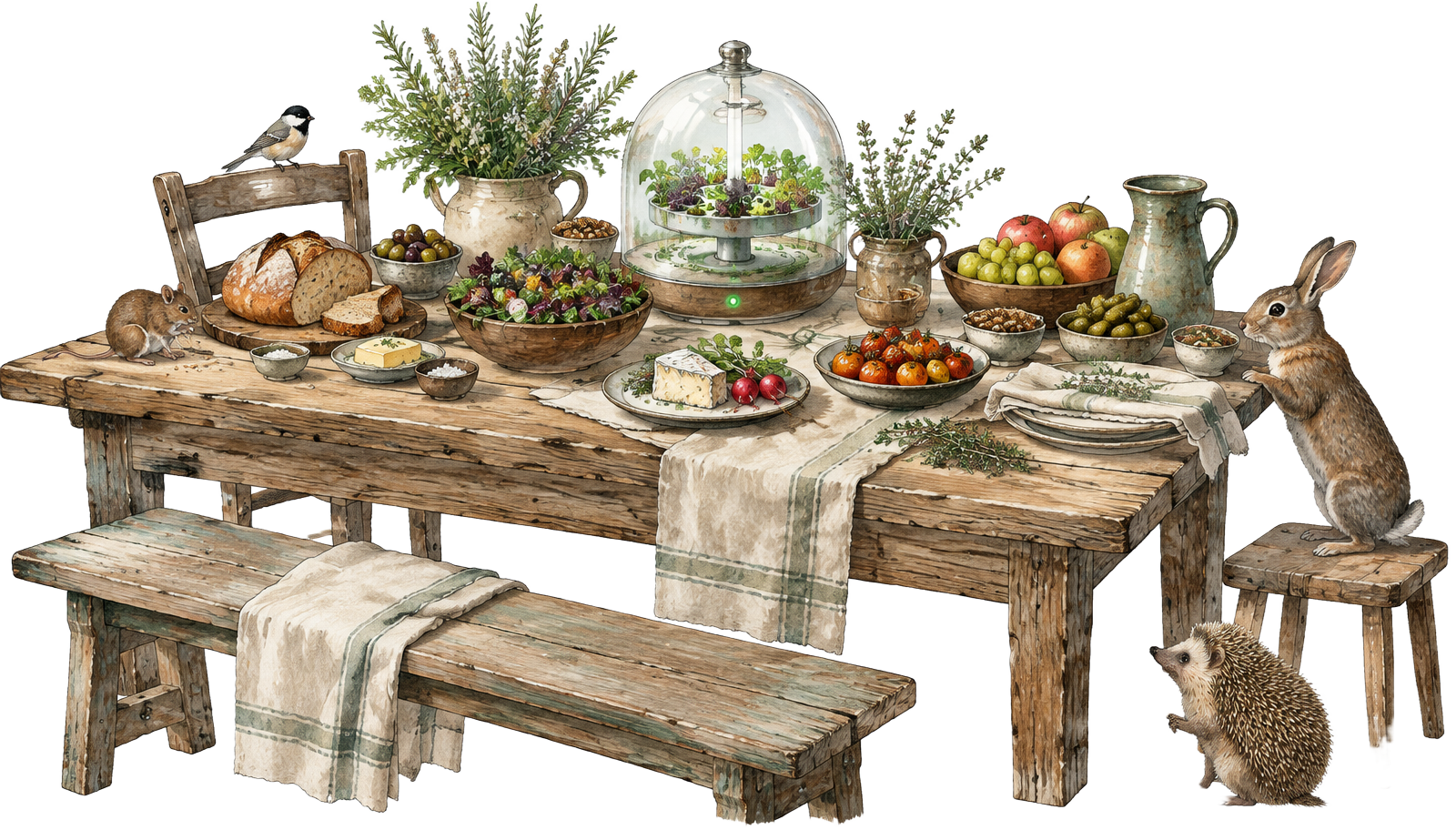
Food is one of humanity’s oldest ways of saying, come sit with us.
Food is technical, but it is never only technical. It is memory, hospitality, family knowledge, labor, culture, gratitude, and the pleasure of passing something good across a table.
Better food systems matter because people eat from them. The future should still have room for seconds.
THE QUESTION BENEATH EVERY QUESTION